

Carehaus is the U.S.’ first intergenerational care-based, co-housing project.
Simple yet innovative, Carehaus combines:
Developmentally-appropriate homes and consistent, quality care for older adults
Quality jobs and homes for caregivers
Social integration for multigenerational residents
Sustainable, economic and cultural revitalization for surrounding neighborhood
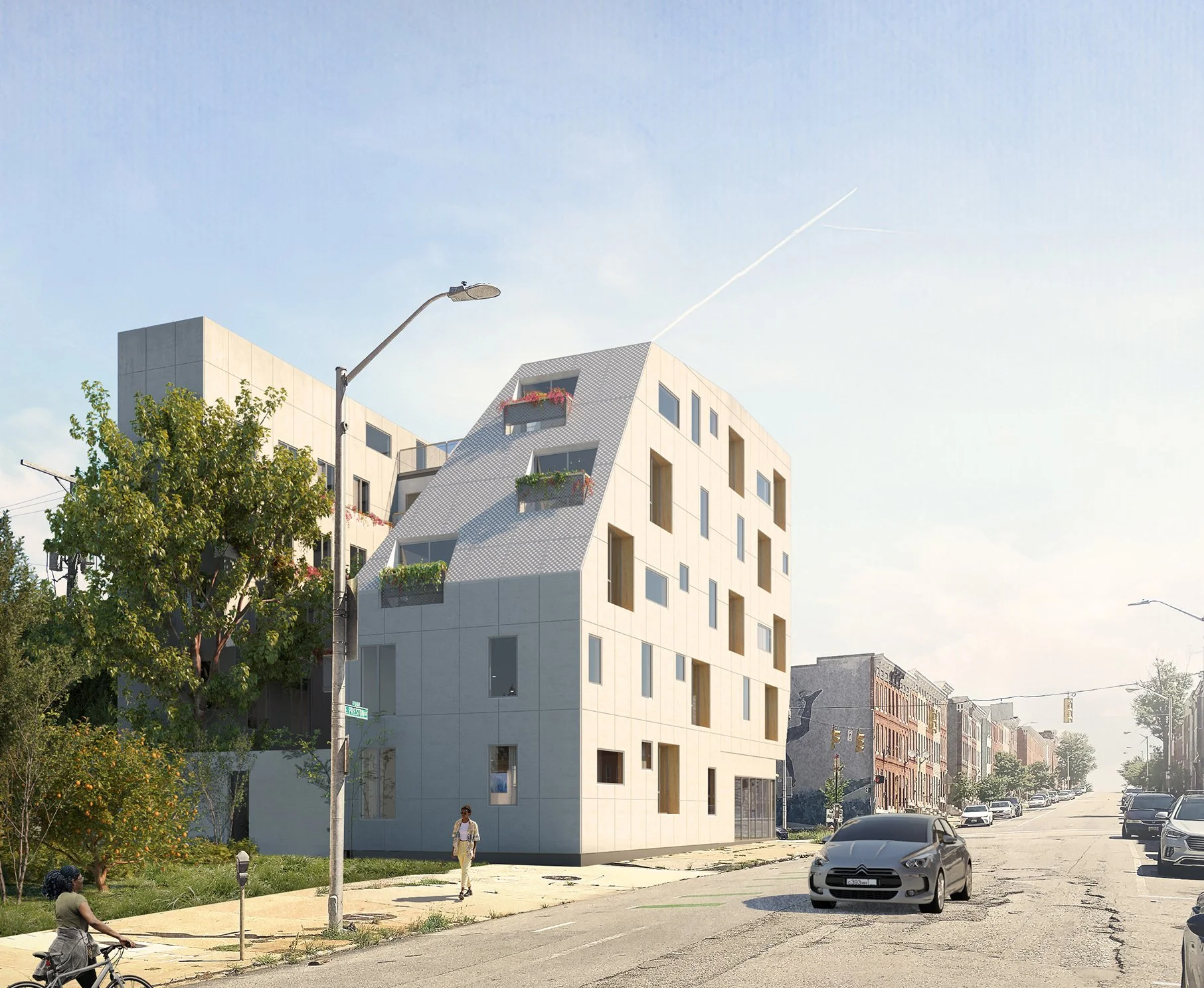
How a Carehaus works:
In a Carehaus, older adults, caregivers and their families live in independent living units clustered around shared spaces. In exchange for their labor, caregivers receive good wages, childcare, and various benefits. An additional team engages residents in shared meals, horticulture, art, fitness, physical therapy, financial literacy courses, and more.
Designed to Scale
Carehaus’ scalable approach allows it to be designed as a standalone building or integrated within a larger complex of buildings, from low rise to mid-rise and high-rise arrangements. While each Carehaus responds to the needs of its surrounding community, they all share the fundamental idea of mutualizing the costs of dignified living, providing good jobs for caregivers, and caring for their families.
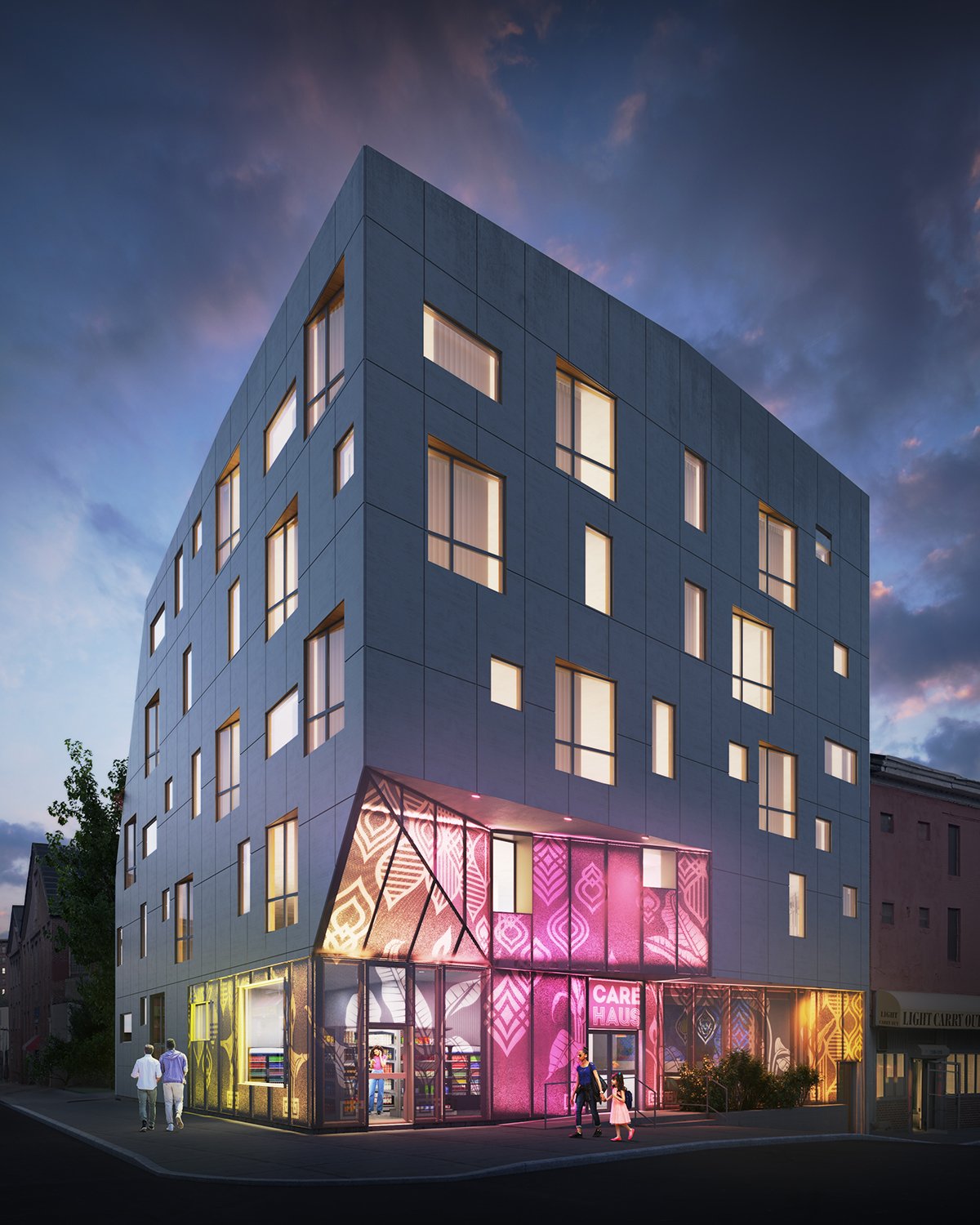


Carehaus’ thoughtful design becomes a place where residents and neighbors want to live and gather.

Carehaus’ strategy of development without displacement in historically divested neighborhoods strengthens its surrounding community:
Neighborhood anchor and community space
Thriving mixed-use residential and retail spaces
Job training, workforce development, and two-way mentorship for olders and youngers
Freeing up adult children and family caregivers to pursue their careers and education
Densifying neighborhoods with safe, livable homes, increasing housing stock and homeownership, and passing on generational wealth

Aequo: [Latin] to make level, equal; root word of the word equity.
Carehaus is the flagship initiative of Aequo Foundation, a 501(3)(c) non-profit committed to providing affordable and workforce housing, both homeownership and rental units.
Aequo Foundation works to level the field in the real estate industry, allowing developers of color or of other non-traditional backgrounds to shape how, where and for whom development occurs in their communities. The foundation also partners with universities to provide non-traditional developers seeking high level graduate level real estate training.

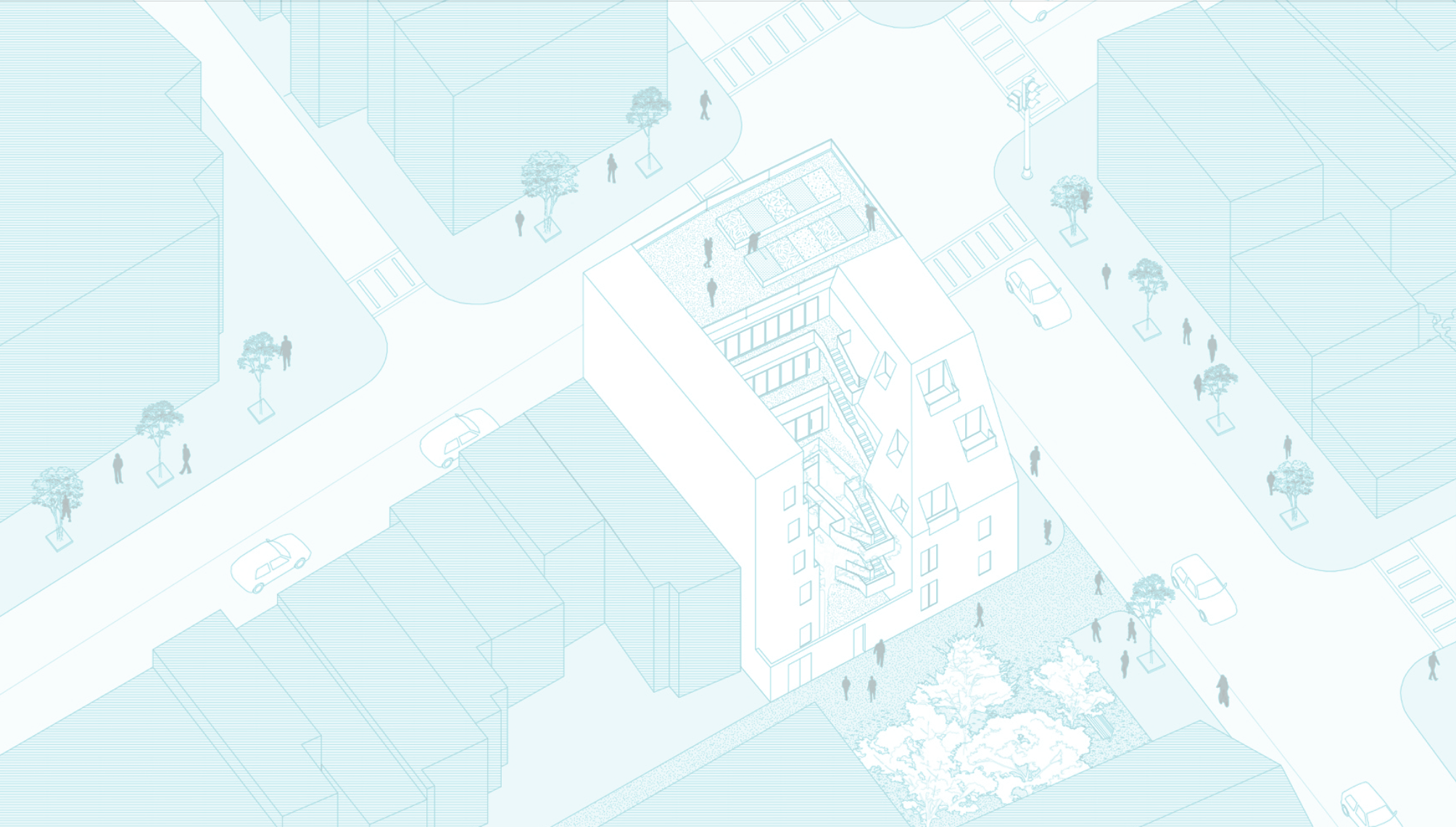
Development without displacement: Carehaus activates a corner in Johnston Square, a historically-divested neighborhood in Central Baltimore.
Drawing by Rafi Segal A+U, 2020
Mission & Values
Carehaus is founded on the belief that older adults and those who care for them are integral to the well-being of our communities.
Yet as a society, we have yet not begun to design for the increasing number of aging, disabled, or visually impaired people in our neighborhoods — nor design for those who care for them.
Through accessible architecture/design and programming, Carehaus enables residents to fully participate in a democratic society.

Designs for care and living: Carehaus’ communal areas (designated by pink spaces) enable shared meals, past times, relaxation, gardening, art and fitness classes, and more.
Drawing by Rafi Segal A+U, 2020
Carehaus is founded on the belief that dignified care should be accessible to anyone who needs it.
Challenge: Long-term care is financially out of reach for 90% of older adults in the U.S. At the same time, there are simply not enough caregivers to meet the existing needs of older and disabled adults. Care gaps lead to to poor nutrition, missed medication, and costly, preventable late-stage hospital admissions.
Solution: Carehaus designs for “congregate care” or “care-sharing” which makes caregiving more efficient and safer: caregivers can take turns keeping an eye on those who need close monitoring or support each other in tasks such as leaning over to lift heavier residents.

Pandemic-friendly architecture: Various features (outdoor gardens and terraces for socializing, no narrow corridors, drop off locations for packages) anticipate the needs of a pandemic.
Drawing by Rafi Segal A+U, 2020
Carehaus is founded on the belief that caregivers’ stability directly impacts the health of older and disabled people in times of regular illnesses and in crises.
Challenge: In the United States, caregiving is an industry characterized by low wages and high turnover. 60% of caregivers in the United States face food insecurity and housing instability.
Solution: Carehaus provides caregivers with good wages, benefits, childcare, and housing designed to balance their need for privacy with shared amenities. By providing good jobs and reducing turnover, Carehaus passes these cost-savings on in terms of affordable care for older and disabled residents.
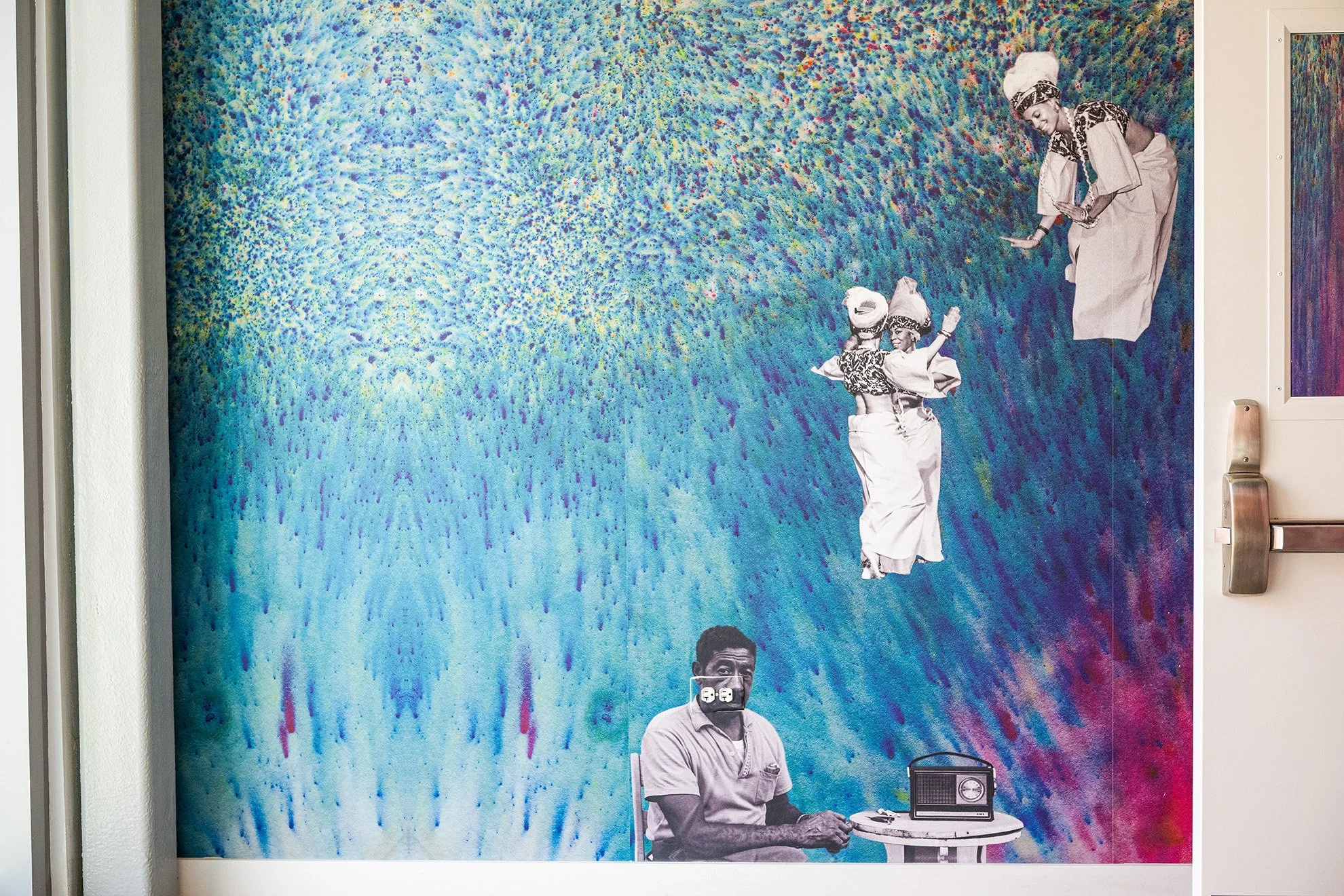
Arts and Local Histories: Wallpaper celebrating Baltimore’s cultural efflorescence and civic leadership starting in the 1960s through 1970s led low-income families; this sneak peek on view at The National Public Housing Museum. Art by Marisa Morán Jahn in collaboration with Micah Campbell Smith and Dr. Sarah Szanton, 2024 with permissioned archival photos from the Robert Breckman Chapman Archive, University of Baltimore. Photo by Colin Campbell, Chicago Block Club.
Carehaus is founded on the belief that art, architecture, and design are key tools to dignify aging, celebrate care, and contributes to a neighborhood’s cultural esteem and resilience.
Challenge: To reverse decades of cultural and economic disinvestment in minoritized communities and the wellbeing older adults, society needs art, architecture, and design to help lead this shift.
Solution: Art, architecture, and designs at each Carehaus will reflect its unique environment — neighborhood, community, history — and provide opportunities for residents and visitors to reflect and engage with each other.
Our story: After her own family’s struggles with care and a decade of creative collaborations with caregivers and care-receivers, artist and MIT Research Fellow Marisa Morán Jahn initiated Carehaus. Inspired by social movement leader Ai-jen Poo’s writing, Jahn sought new designs to help solve the U.S.’ care and housing crisis. She reached out to architect and MIT Professor Rafi Segal, with whom she taught several classes. They soon connected with MIT MLK Scholar Ernst Valery, an urban planner and real estate developer.
Team

Marisa Morán Jahn
Co-Founder
Marisa Morán Jahn is an artist of Ecuadorian/Chinese descent whose work across media and scales explores “civic spaces and the radical art of play” (Chicago Tribune). Jahn’s work directly engages new immigrant families and low-wage workers — and millions more via The United Nations, Obama’s White House, Venice Biennale of Architecture, Guggenheim Museum, Tribeca Film Festival, and international media (The New York Times, Wall Street Journal, Univision, BBC, CNN, Fader). She has received awards from Creative Capital, Sundance, U.S.A. Artists, Anonymous Was a Woman, Joyce Foundation, and Rockefeller Foundation. She directs the Integrated Design Program at Parsons/The New School. She previously taught at Columbia University and MIT where she continues as a Senior Researcher. Instagram

Rafi Segal
Co-Founder
Rafi Segal is an architect, Professor of Architecture and Urbanism at MIT, and the director of Future Urban Collectives whose work explores how emerging notions of sharing and collectivity impacts the design of buildings and cities. Segal’s large scale urban plans include a regional plan to address future flooding and sea level rise in the New York metropolitan area, a peace museum and library in Uganda, and communal neighborhoods in Israel, Rwanda, and the Philippines. With Jahn, Segal’s designs to transform a former brick factory in the heart of Kosovo’s capital, Prishtina, into an art and technology district which won the 2025 Holcim Grand Prize Award. Segal’s work has been exhibited at the Venice Biennale, Museum of Modern Art, and the Hong Kong/Shenzhen Urbanism Biennale. He holds a PhD from Princeton University and a M.Sc and B.Arch from Technion Israel Institute of Technology. Instagram

Ernst Valery
Co-Founder
A Haitian-American immigrant, Ernst Valery is the founder and president of SAA | EVI affiliate Ernst Valery Investments Corp. (EVI), a minority-owned real estate investment firm that invests in select underserved and undervalued key emerging urban transitional areas with high residential and retail demand. Valery also actively engages in social entrepreneurship. At The University of Chicago Booth School of Business, he teaches a course entitled “Development Without Displacement.” Valery received a MS in Real Estate Development from Columbia University; a MS in Policy Analysis and Public Administration and BS in Urban and Regional Planning from Cornell University. Ernst is a MLK Community Fellow at MIT’s CoLab.
-
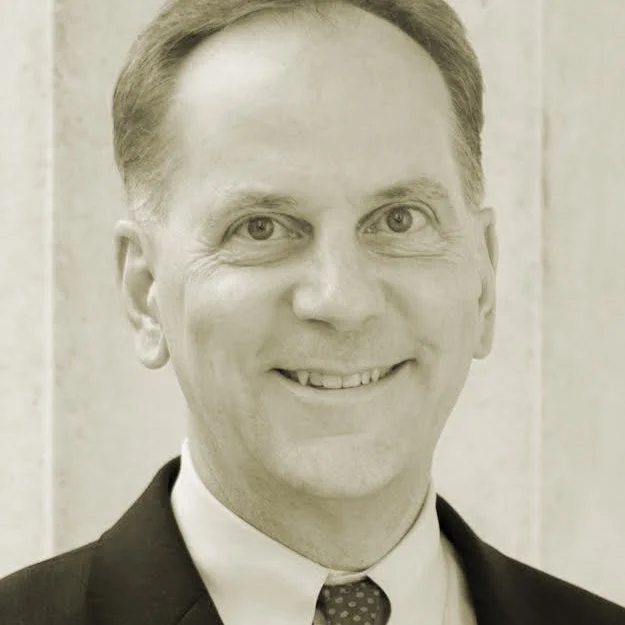
Chip Roth
Strategic Partner
Chip Roth was appointed by President Obama to a leadership role in the Small Business Administration, where he developed excellent relationships across the finance community. Thus, he continues to facilitate financing. Prior to this role, he advised VF Corporation, the world’s largest clothes-maker at the time, in realigning its supply chain to take more responsibility for the communities in the 52 countries where it sourced product. As such, Chip was part of bringing health care, education and nutrition to some of the poorest communities in the world. Previously, Chip served as a lead negotiator on multi-billion dollar labor contracts across America. He is an honors graduate of the University of Pittsburgh, which he attended on a full academic scholarship.
-

Denise Turner Roth
Strategic Advisor
Denise Turner Roth reported directly to President Obama as the head of the General Services Administration where she managed 13,000 employees and had $155 billion flow through the accounts that she oversaw each year. Then she served as President of Advisory Services for WSP, the world’s premier infrastructure engineering firm. In this role she led 500 industry leading professionals, advising C-Suite executives on infrastructure planning and policy. Prior to these roles, she served as City Manager of Greensboro, NC. Now, as a consultant, she is advising Harvard’s Kennedy School of Government, Accelerator for America and North Carolina A&T University, the nation’s largest HBCU.
Advisors
Sunny Bates, Co-founder, Kickstarter; Board Member, TED
Caitlin Casperson, Independent Advisor
Sharon Chang, Entrepreneur, Shark Tank; Guild of Future Architects
Thomas K.M. Cudjoe, Geriatric Medicine and Gerontology, Johns Hopkins University
Colleen Keegan, TED Talks, Creative Capital
Ellen Lupton, Maryland Institute College of Art, Cooper-Hewitt Smithsonian Design Museum
Ari Medoff, Partner, Arosacare
Ai-jen Poo, Co-Founder, National Domestic Workers Alliance; Caring Across Generations
Amy Rosenblum-Martín, Independent Curator
Bonnie Swenor, Johns Hopkins School of Medicine; Disability Health Research Center
Sarah Szanton, Johns Hopkins School of Nursing; Center on Innovative Care in Aging
Jen Van Der Meer, Business Model Designer; CEO, Reason Street; professor, Parsons School of Design
Partners, Collaborators
Baltimore Museum of Art
Debevoise & Plimpton, LLC
Caring Across Generations
Johns Hopkins University
Natl Domestic Workers Alliance
Northeastern University School of Law
Parsons/The New School
Open Works Baltimore
Additional Team
Design Team: Ous Abou Ras, Alina Nazmeeva, Marisa Concetta Waddle, Paul Gruber
Research & Development: Micah Campbell-Smith, Laura Cadena, Luis Alberto Meouchi Velez
Press

“[Carehaus’] care-based, intergenerational cohousing concept is creating buzz.” Sally Abrahms, “Introducing a New Kind of Intergenerational, Care-Based Cohousing.” AARP, April 10, 2024.

“[Carehaus] reimagines housing with bold, inventive solutions…offering a fresh perspective on affordability, sustainability and community.”
Anthony Burke. “The Home Front: Lessons From Afar.” ABC Australia, Sept 15, 2025.

“[Carehaus] directly addresses the question of exchange of labour in the kitchen.”
Marianna Janowicz. “Kitchen debate: where labour and leisure collide.” Architectural Review. January 6, 2022.

“[Carehaus is a] modest, low-cost experiment that points the way to bigger, longer-term solutions.”
Howard Gleckman. “3 Experiments To Help Reduce Senior Care Worker Shortages.” Forbes, Nov 16, 2023.

“Someday people who need assistance might choose to live in something like Carehaus, a residence where the elderly and their caregivers live together.”
Bryce Covert. “Imagining a better way to grow old in America,”The Nation. July 26, 2021.

“A simple yet innovative concept combines stable housing, intergenerational care, social integration, and neighborhood revitalization.”
Marisa Morán Jahn and Rafi Segal. “Architecture plays a key role in re-imaging care solutions,” Op Ed in The Boston Globe, April 26, 2021.
The making of Carehaus is featured in a half-hour documentary film series entitled “Where We Grow Older” conceived by Canadian Centre For Architecture (CCA)’s Director Giovanna Borasi, directed by Daniel Schwartz, and produced by the CCA. World Premiere at Lisbon Architecture Film Festival, 2023 with subsequent screenings internationally.

“…when architects, designers, and communities work together, they can develop structures and protocols to produce collective spaces that are more responsive to the needs and values of different communities. It’s an exciting new frontier with many possibilities.”
Paul Makowsky. “The Transformative Potential of Design Solidarity.” Architect Magazine. April 14, 2023.

“[Carehaus’] project leaders want to center what society too often makes invisible: aging adults and those who care for them.”
Carly Stern. “Caregivers are burned out and underpaid. A new housing model aims to make their work more visible.” Street Light News, May 2, 2022.
Gallery


